

HBD Blog
This is a resource hub from Harrison’s Bird Foods created for bird owners, avian professionals, retailers, and anyone who wants to better understand companion bird health.
Here, you’ll find educational articles, downloadable guides, feeding resources, care tips, and expert insights focused on avian nutrition, preventive care, diet conversion, enrichment, species-specific needs, and overall bird wellness.
Whether you’re new to Harrison’s or continuing to learn more about proper bird care, the HBD Blog is here to help you make informed decisions that support healthier, happier birds.

Atherosclerosis and Cardiac Disease in Companion Psittacines: Pathophysiology, Diagnosis, and Clinical Management
A Clinical Reference for Avian Practitioners | Harrison's Bird Foods Bianca Murphy, DVM, DABVP (Avian Practice) Introduction Atherosclerosis is one of the most common and most underdiagnosed conditions in companion psittacines. It progresses silently over years, and...
Hyperuricemia in Birds and Dietary Therapy
Bianca Murphy, DVM, DABVP (Avian Practice) Confirm the Diagnosis: Not All Hyperuricemia Is Renal in Origin Just as elevated BUN and creatinine in dogs and cats must be interpreted in the context of pre-renal, renal, and post-renal causes, uric acid (UA) in birds...
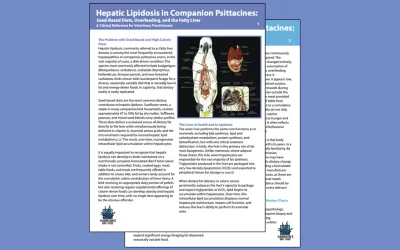
Hepatic Lipidosis in Companion Psittacines: Seed-Based Diets, Overfeeding, and the Fatty Liver
A Clinical Reference for Veterinary Practitioners The Problem with Seed-Based and High-Calorie Diets Hepatic lipidosis, commonly referred to as fatty liver disease, is among the most frequently encountered hepatopathies in companion psittacines and is, in the vast...
HARRISON’S BIRD FOODS HANDBOOK FOR A HEALTHIER BIRD
Decades of Avian Innovation: The Harrison Journey A Legacy Rooted in Science, Care, and Education Past: Where the Journey Began The foundation of Harrison's Bird Foods began with a simple but powerful belief: birds deserve nutrition rooted in science, not guesswork....

Effect of Dietary Change on Faecal Gram Stain Characteristics in Psittacines
Michael Stanford BVSc MRCVS Normal Faecal Microflora Mixed population of gram positive aerobes and anaerobes (Ref: Richie, Harrison and Harrison). Normal psittacine faeces would not be expected to have a gram negative population (Ref: Cheville). Confirmed on recent...
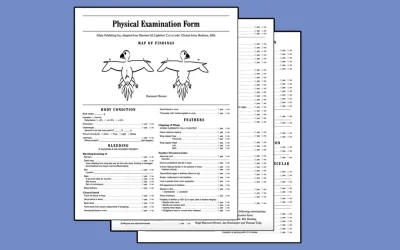
Physical Examination Form
©Spix Publishing Inc, Adapted from Harrison GJ, Lightfoot T, et al (eds): Clinical Avian Medicine, 2005. MAP OF FINDINGS (Diagram of bird body/wings for mapping findings) Harcourt Brown R | L | L | R BODY CONDITION Body weight: _________ g Hydration: [ ] Normal [ ]...

WHAT YOU CAN SEE IN A PSITTACINE FECAL GRAM’S STAIN
In psittacines, the fecal Gram's stain is a significant part of a complete patient evaluation. Although not definitive in making a diagnosis, it provides a visual screen of the percentages of bacteria present in the gastrointestinal tract at the time the sample was...

Ultraviolet Light as a Critical Component of Companion Bird Husbandry
Why it Matters Proper husbandry of any species is crucial for ensuring healthy, well-adjusted pets. The closer we come to recreating the conditions of the species in the wild combined with the benefits of modern science, the more likely the animals are to not merely...
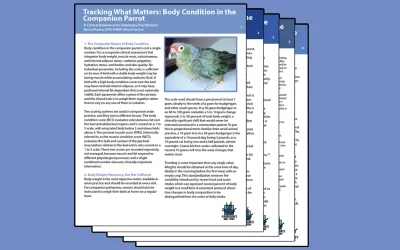
Tracking What Matters: Body Condition in the Companion Parrot
A Clinical Reference for Veterinary Practitioners Bianca Murphy, DVM, DABVP (Avian Practice) The Composite Nature of Body Condition Body condition in the companion parrot is not a single number. It is a composite clinical assessment that integrates body weight, muscle...
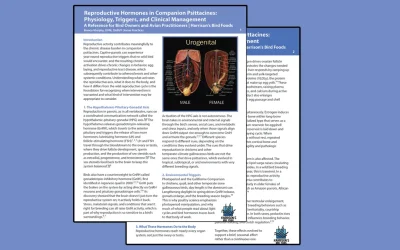
Reproductive Hormones in Companion Psittacines: Physiology, Triggers, and Clinical Management
A Reference for Bird Owners and Avian Practitioners | Harrison's Bird Foods Bianca Murphy, DVM, DABVP (Avian Practice) Introduction Reproductive activity contributes meaningfully to the chronic disease burden in companion psittacines. Captive parrots can experience...

Poicephalus Studbook Data Compared to a 12-year Feeding Trial Using an Organic Formulated Diet
ERIC A.W. VAN KOOTEN, BSc Since 1985, parakeets and parrots have been successfully bred at our breeding facility. Although various kinds have been bred, the first breeding of Poicephalus rueppellii can be indicated as a highlight. This success has been realized by a...
ExoticDVM Publications: A Lasting Resource for Exotic Animal Veterinary Medicine
For more than a decade, ExoticDVM Magazine served as one of the veterinary profession's premier educational resources dedicated exclusively to exotic animal medicine. Published by the Zoological Education Network, the award-winning publication brought together leading...