

How to Live with Pet Ducks
Ducks can make charming, affectionate, and productive pets, living 10-15 years, but they are high-maintenance animals requiring significant cleaning, outdoor space, and companionship (minimum of two). They are messy, need constant access to fresh water for bathing/drinking, and require predator-proof housing. They are intelligent, social creatures that can be quite affectionate with early handling. Many breeds lay eggs regularly, often more consistently than chickens.
What to Know About Your Pet Ducks
Check local zoning laws, as some areas prohibit livestock or poultry in residential zones. Popular backyard breeds include Pekins, Runners, and Call ducks. Call ducks are small, typically weighing around 1 to 2 lbs, which means they require less space and consume less food. Peking ducks are popular, gentle, and docile. Muscovy ducks are generally quiet (hiss instead of quack) and good mothers.
Because all ducks are slow and defenseless, they need a secure, well-ventilated, predator-proof house at night to protect them from foxes, raccoons, and birds of prey. A water source for swimming, like a kiddie pool, is necessary. They poop frequently (every 10-30 minutes) and make mud, requiring consistent cleaning of their coop and water sources.

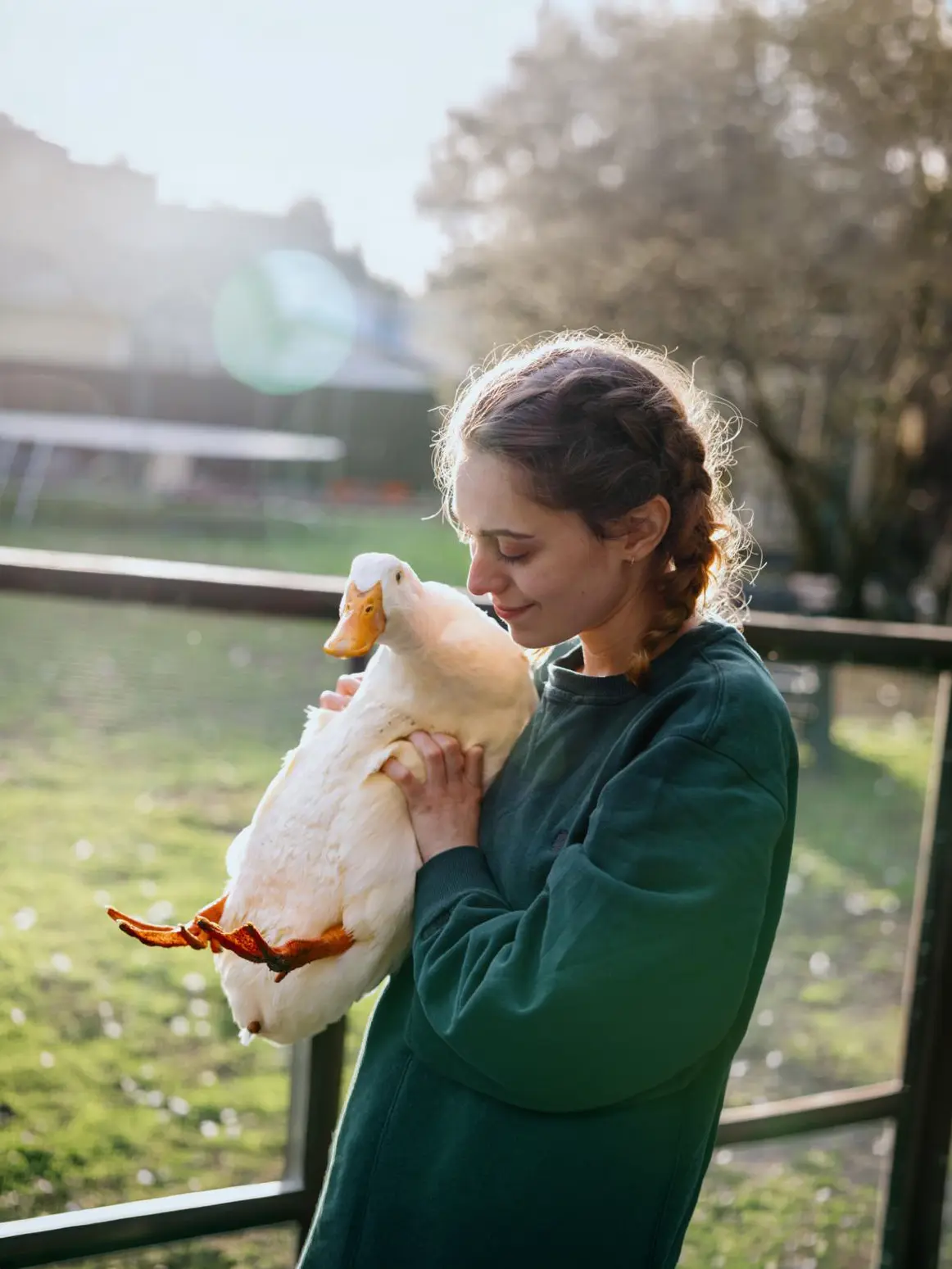
Is My Pet Duck a Boy or Girl?
Sexing pet ducks is easiest once they are 6–8 weeks old, focusing on their vocalizations and tail feathers. Females produce a loud, sharp “quack,” which may disturb neighbors, while males (drakes) make a low, raspy, or ‘froggy” sound. Drakes also develop a drake curl, a distinct curled feather in their tail and are typically larger with thicker necks.
How to Keep Your Pet Ducks Happy
Because ducks are highly social, they must be kept in groups; keeping only one can lead to loneliness and stress. On the positive side, ducks eat slugs, snails, and mosquitoes, and are generally less prone to diseases than chickens. They require specialized waterfowl feed, which is different from chicken feed, along with leafy greens and vegetables. Before buying, it is important to consider the long-term commitment of up to 15 years.