
How to Live with an Eclectus
Eclectus are relatively calm birds in captivity, especially in the presence of strangers. They may exhibit a pensive nature when considering new situations. However, individuals may be playful and rambunctious when they are comfortable with family members. To a greater degree than other companion birds, they may be fearful of anything new. This fear may be reflected in the high incidence of feather picking, especially in timid males. In captivity, eclectus females generally tend to be more aggressive than males.
What to Know About Your Eclectus
Eclectus parrots originate from Australia, New Guinea and other South Pacific islands. Of the ten eclectus subspecies, the three most commonly seen in captivity are the red-sided, Vos and Solomon Island. Both genders have mimicking ability, although the male may be a better talker. There are reports of eclectus parrots developing a nervous habit of “toe tapping” or “wing flapping.” The cause is unknown, but if the birds are otherwise healthy, the condition usually abates with time. There have been some suggestions that this behavior in eclectus may be associated with normal breeding/social patterns.
Is My Eclectus a Boy or Girl?
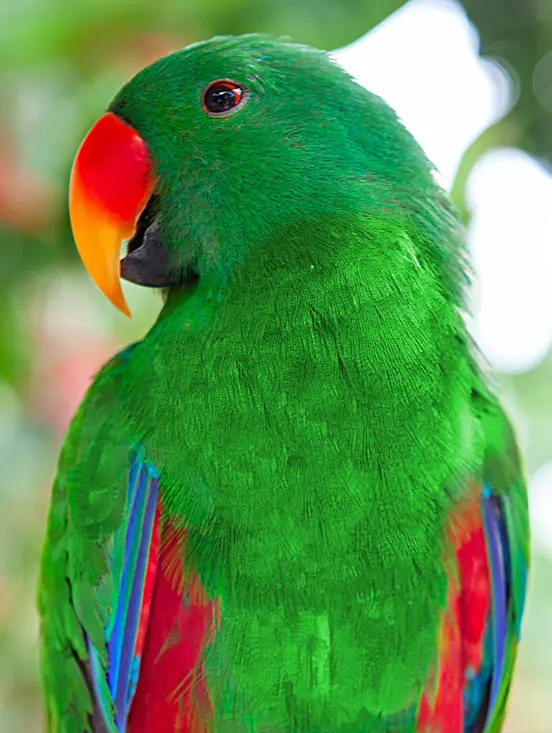
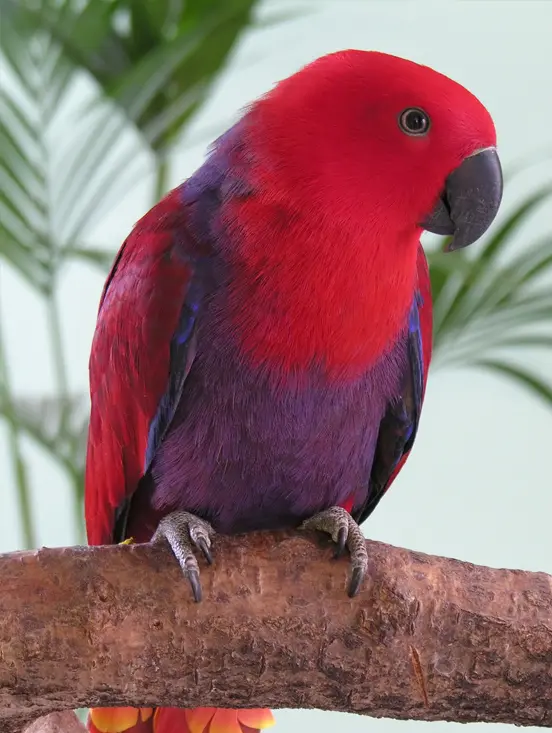
It is easy to determine the gender of an eclectus parrot, not only because of behavioral characteristics, but because the male is green and the female is red. Because of the distinct color differences, eclectus parrots were originally believed to be two separate species. The red color is believed to provide protection to the female, who may spend months in a nest hollow in a tree, and the green color reduces visibility of the male who forages among the rainforest canopy.
How to Keep Your Eclectus Happy and Healthy
Young, hand-raised eclectus parrots adapt readily to new surroundings and handling procedures. Male eclectus parrots tend to be more docile than females, especially when hand-raised. The most common health disorders found in eclectus parrots are feathering picking, hypovitaminosis A, bacterial infections, annular toe deformities (neonates), wing flapping and toe tapping.