
How to Live with a Pet Chicken
Before acquiring a pet chicken, city dwellers need to check with their local zoning board to make sure they are allowed. Additionally, if roosters are involved, there may be local noise regulations. Of all the backyard bird species, chickens seem to be the fowl to which owners most easily bond and for which they are willing to seek veterinary attention when needed.
What to Know About Your Pet Chicken
Various chicken breeds have developed from domestication of the red jungle fowl (Gallus gallus, forma domesticus) for different purposes, including egg laying, meat or exhibition. There are over 400 varieties of chickens, including differences in size, colors, patterns, general disposition of the breed and suitability for the climate. Chickens are social birds and do not fare well on their own, so you should have a minimum of two. Each chicken has its own completely unique personality, and owners appreciate this as well as their beauty. They have the potential to live for 10-11 years.
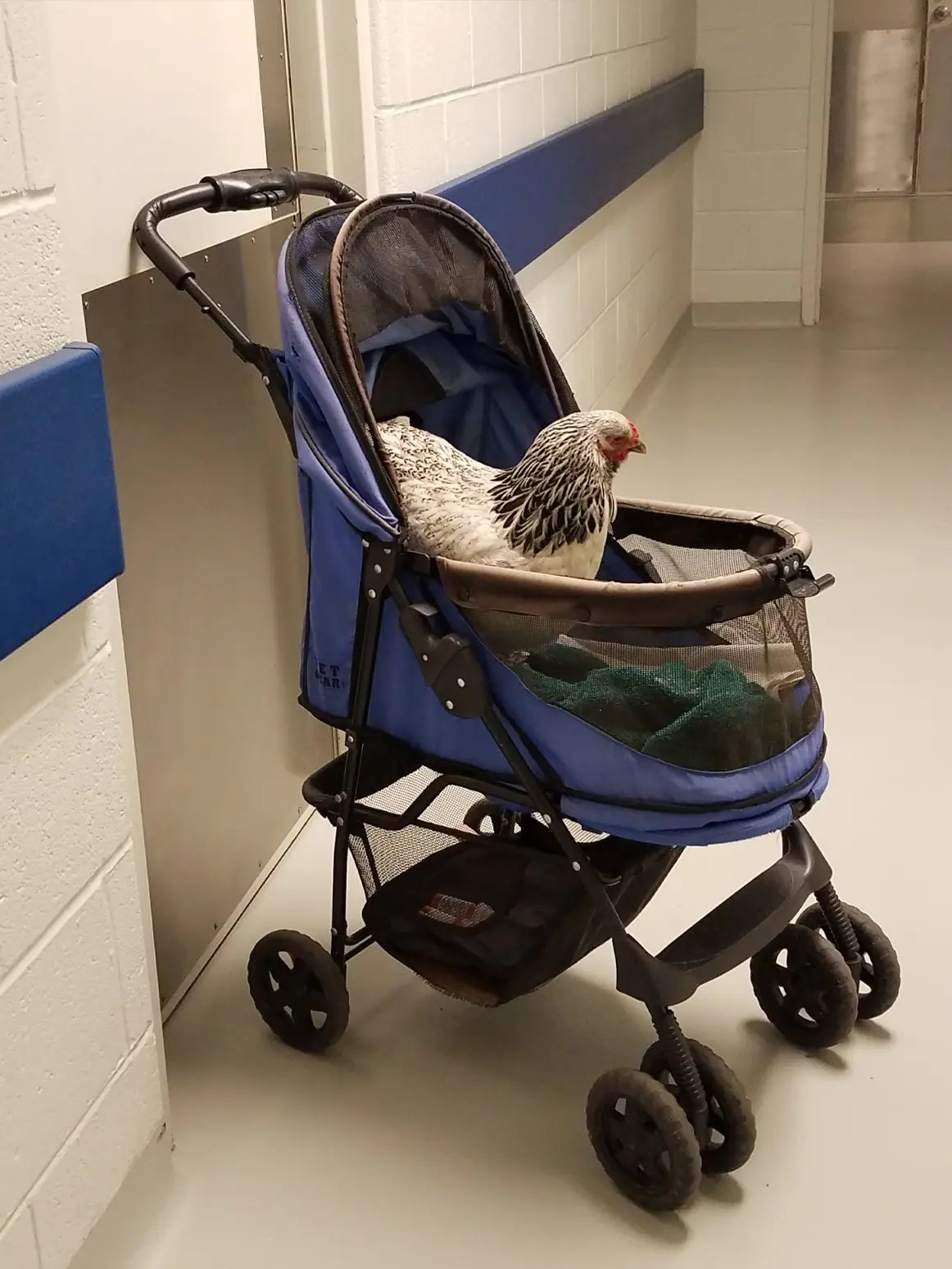
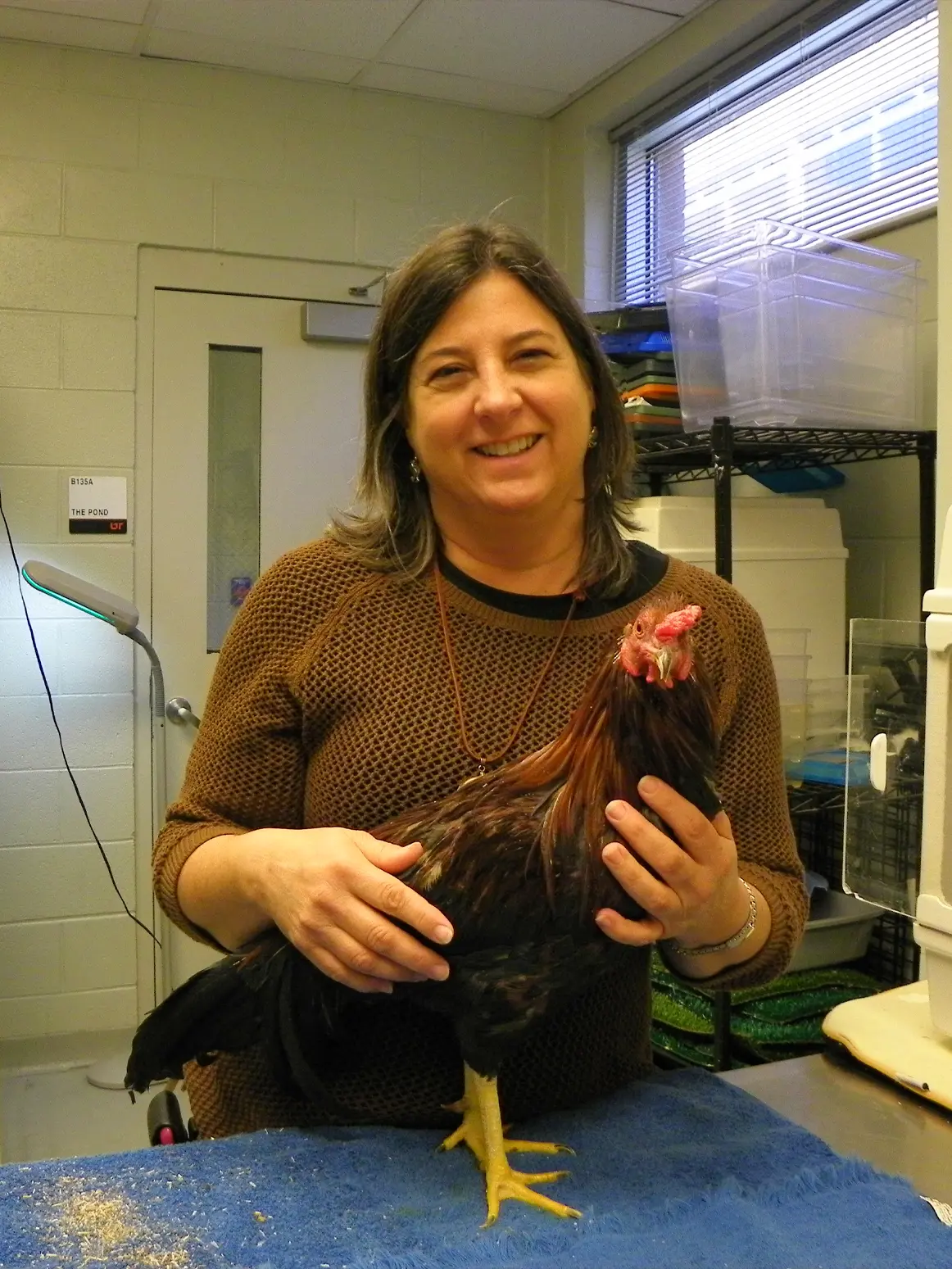
Is My Pet Chicken a Boy or Girl?
Adult chickens show a marked sexual dimorphism. The size (height and width), body mass (weight), color of the plumage, shape of certain feathers, presence of spurs, and length and color of the tail feathers assist in gender determination. However, there are instances where cocks may have plumage that resembles hens, and hens may exhibit behavior and plumage similar to males.
How to Keep Your Pet Chicken Happy
Chickens love to roam free. Research shows that chickens allowed to roam freely and eat grass and bugs lay eggs that are higher in Omega-3 fatty acids and vitamin E and lower in cholesterol than store-bought eggs. Depending on the climate, a coop with 10 square feet per bird is adequate as long as they have an outdoor “run” area or are allowed to range freely. Protection from potential predators is mandatory.
Most chickens take baths in dust or sand rather than water. The use of these abrasive materials on the plumage may function to lightly abrade and polish the edges of the feathers and may reduce the number of external parasites as long as the sand itself is not contaminated. Insect powders should be used only if they are known to be nontoxic and only if the birds in fact have parasites. Beak trimming is not recommended in chickens raised for hobby.
Diet
Commercial formulated diets are available for domestic fowl and include chick starter, layer, broiler and adult maintenance, with considerable variation in the levels of calcium, protein and energy among the rations. Birds that are not allowed to freely roam should have access to grit.
Most Common Disorders in Small Chicken Flocks
Pet chickens are susceptible to a wide variety of viral, bacterial, mycoplasmal, parasitic, chlamydial, rickettsial and fungal agents. The goal in small chicken collections should be disease prevention by avoiding entry of disease organisms onto the premises. Vaccines for fowl are readily available for commercial use but not for smaller collections. Diseases commonly considered for vaccination, if endemic or if virulent strains are of concern in the area, include Marek’s disease, infectious laryngotracheitis, pox, Newcastle’s disease and infectious bursal disease.
Cannibalism may be expressed as vent picking, feather pulling, toe plucking, head picking and egg eating. Overcrowding, incorrect feeding, an inappropriate daylight cycle, high light intensity, poor housing conditions, genetic predisposition and other factors may all promote cannibalism. No matter the breed in the collection, one bird will be at the bottom of the pecking order, and another will be at the top.