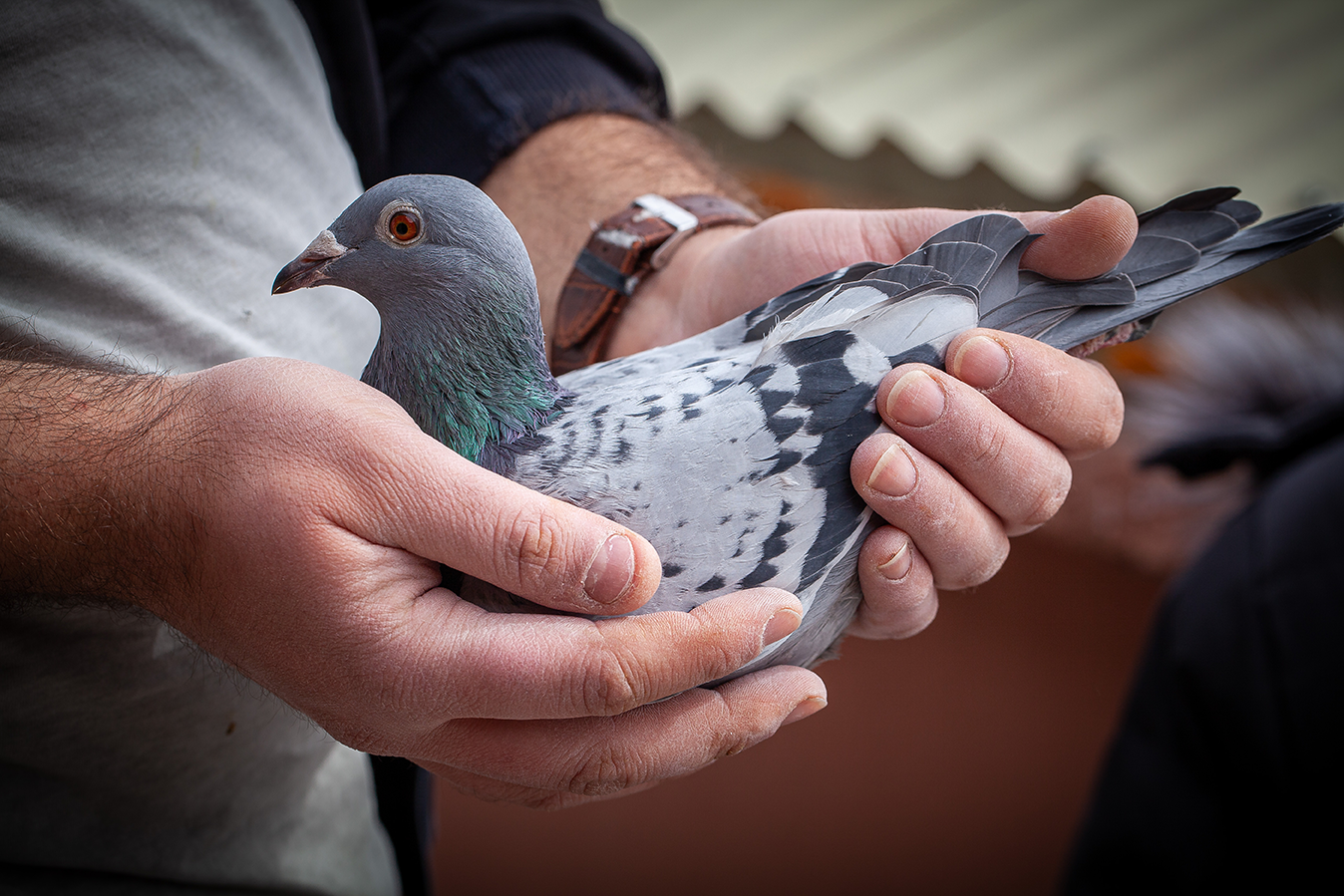
Focus on Pet Pigeons
By Dr. Jan Hooimeijer
The Netherlands
The same management principles used in poultry and pigeon medicine can be applied to reduce disease in aviculture collections and companion birds.
Prevention is much more than an annual health check. It should be part of a daily routine and depend on different changing (environmental) aspects. Lack of sunlight, lack of privacy and behavioral/welfare problems are generally not acknowledged as health issues, although they are significant factors

Separation of Birds
The most important approach to prevent disease is a strict management protocol. Critical issues are climate control, prevention of overcrowding, and removing chicks from the breeding program based on body development, feather quality and social behavior within the group. Young birds that are picked on by others will not thrive. Those birds will disappear and will die sooner or later.
When there are health problems, the first step is to select and separate those individuals that are showing clinical signs and possibly another 10-15% that are not yet sick but are less viable compared with the remaining birds in the group. In nature there is a strong selection to ensue the long term health and viability of a healthy population.
Birds/Caretaker Relationship
A positive relationship with the birds is crucial to preventing behavior and welfare problems. Birds must feel comfortable in the presence of the caretaker.
Pigeon Vaccinations
Vaccinations against pigeon paramyxovirus, Salmonella paratyphoid, pigeon pox, possibly avian polyomavirus and avian influenza, depend on local risk and lifestyle.